Project 01
Design for Dignity
An accessible pruning tool designed with older adults in long-term care to support horticultural therapy, independence, and comfortable participation.
Context
Designing with older adults, not simply for them.
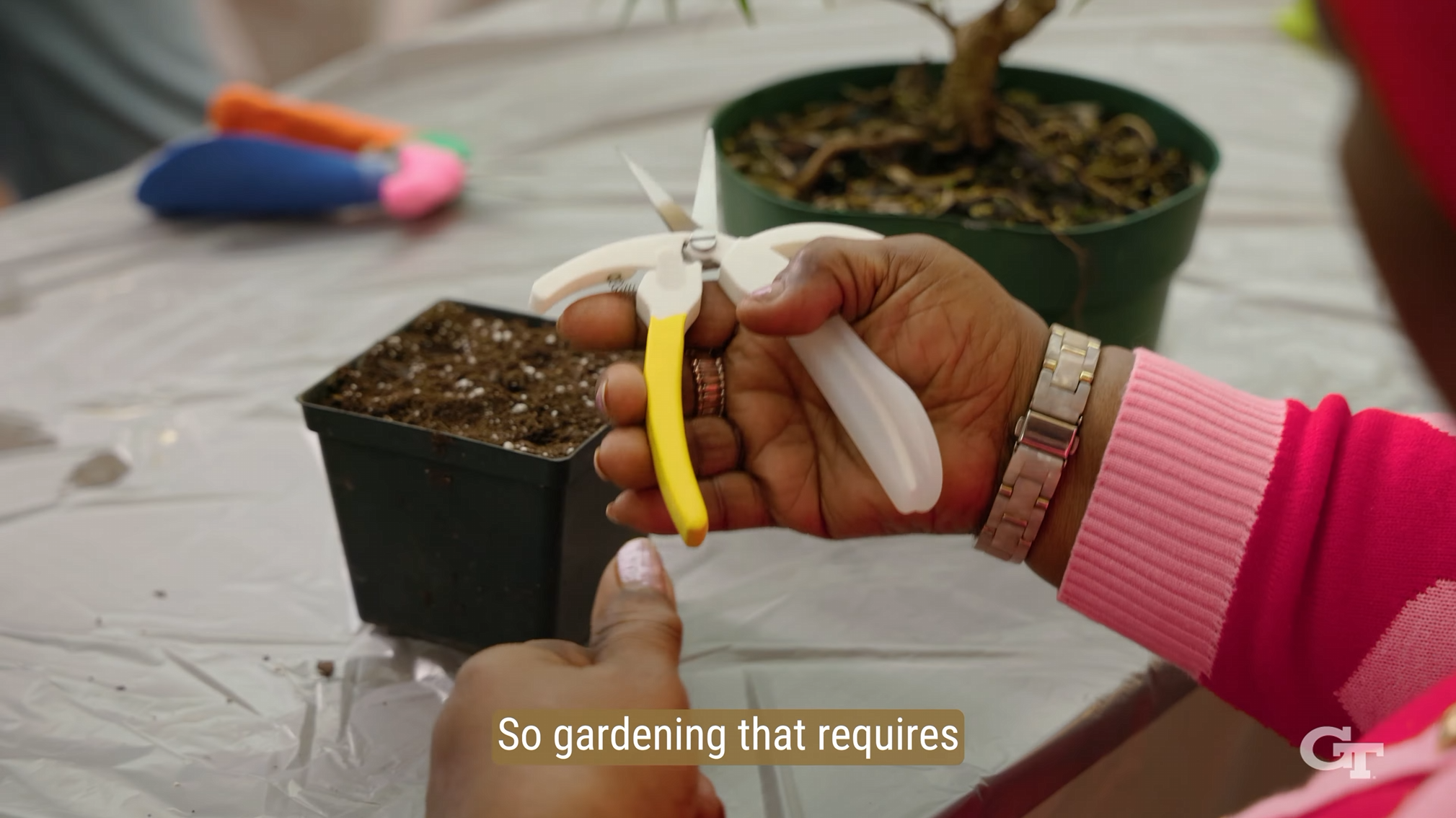
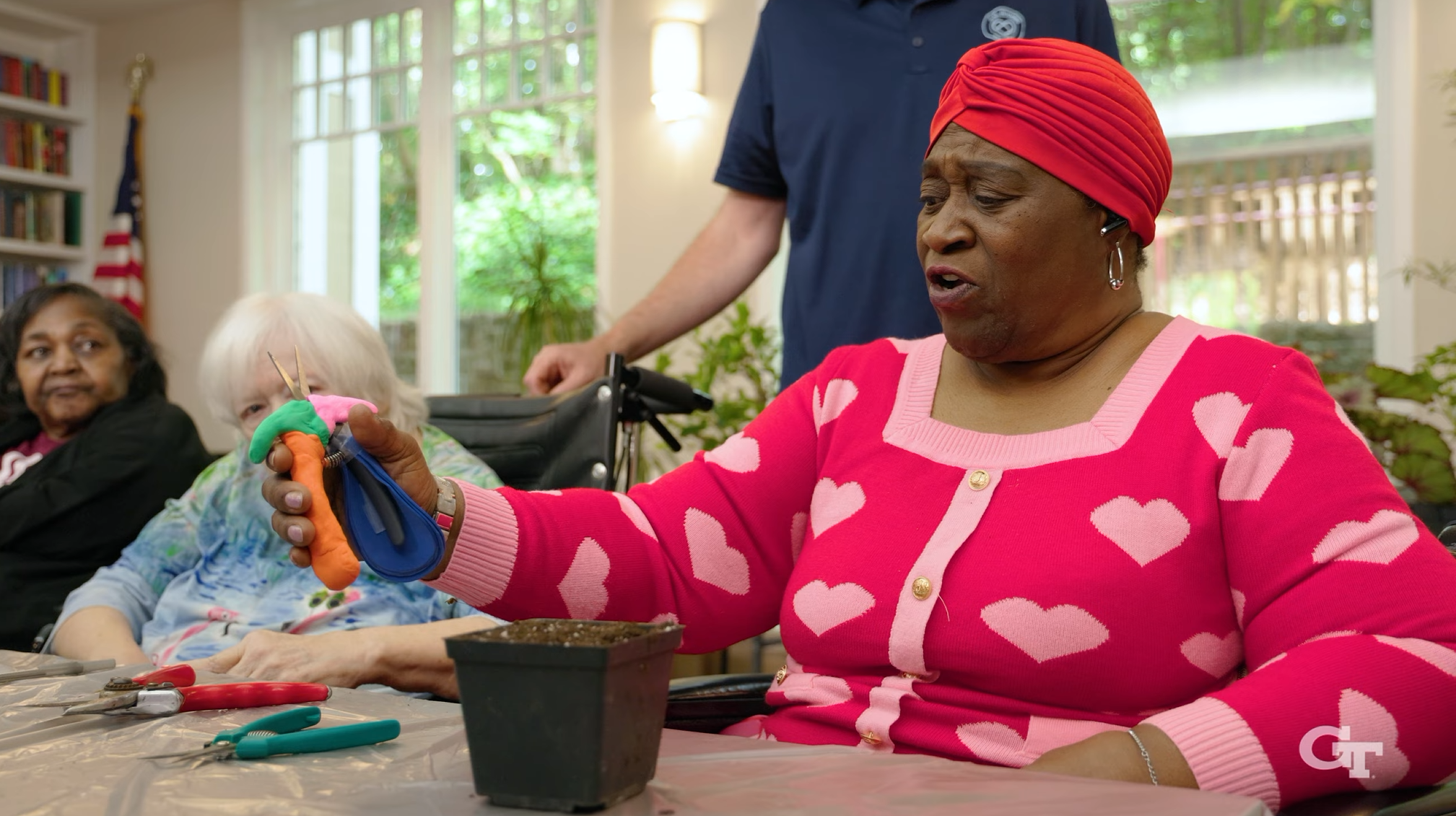
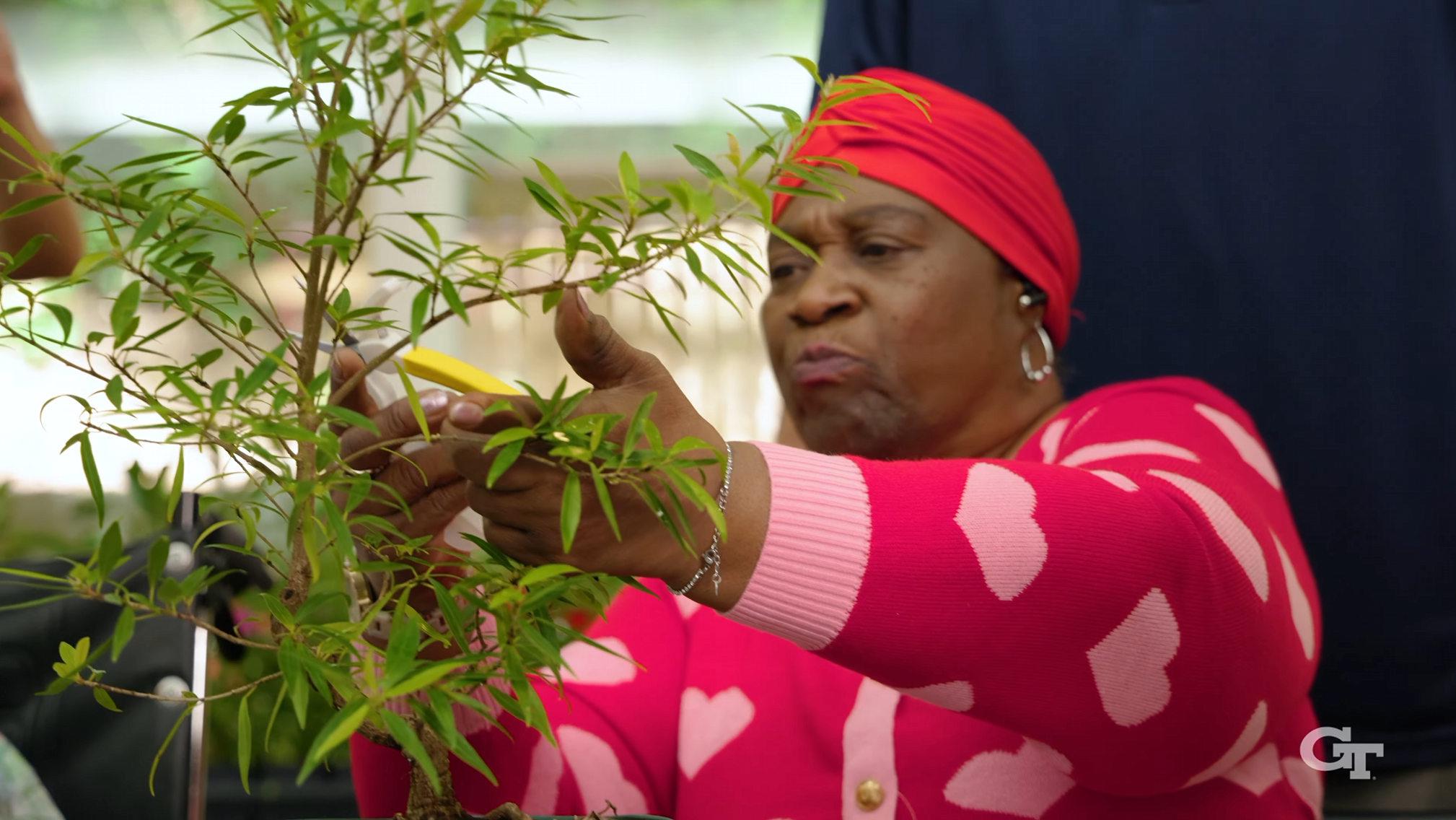
Design for Dignity began in a Georgia Tech studio focused on community wellbeing and long-term care. The project centered on horticultural therapy at A.G. Rhodes, where gardening can support participation, independence, and social connection for older adults.
Research and co-design work with residents informed the initial direction of the tool. The project then continued through We-ID as an undergraduate research project focused on refining the tool, its form, and its potential use in care environments.
The work was later featured by Georgia Tech Research in article and video form, as well as by the World Design Organization and Dezeen .
Research
Understanding barriers to gardening participation.
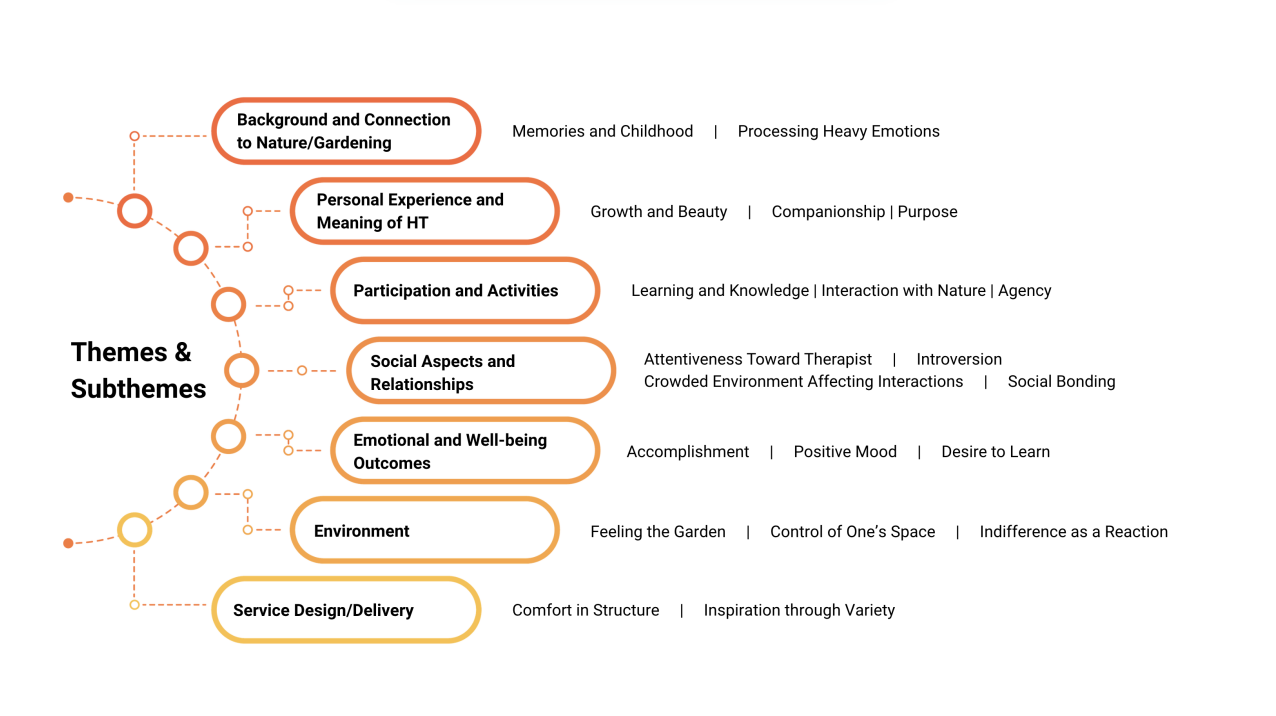
Research focused on the relationship between gardening tasks, hand strength, grip comfort, mobility, visibility, and the physical setup of horticultural therapy activities.
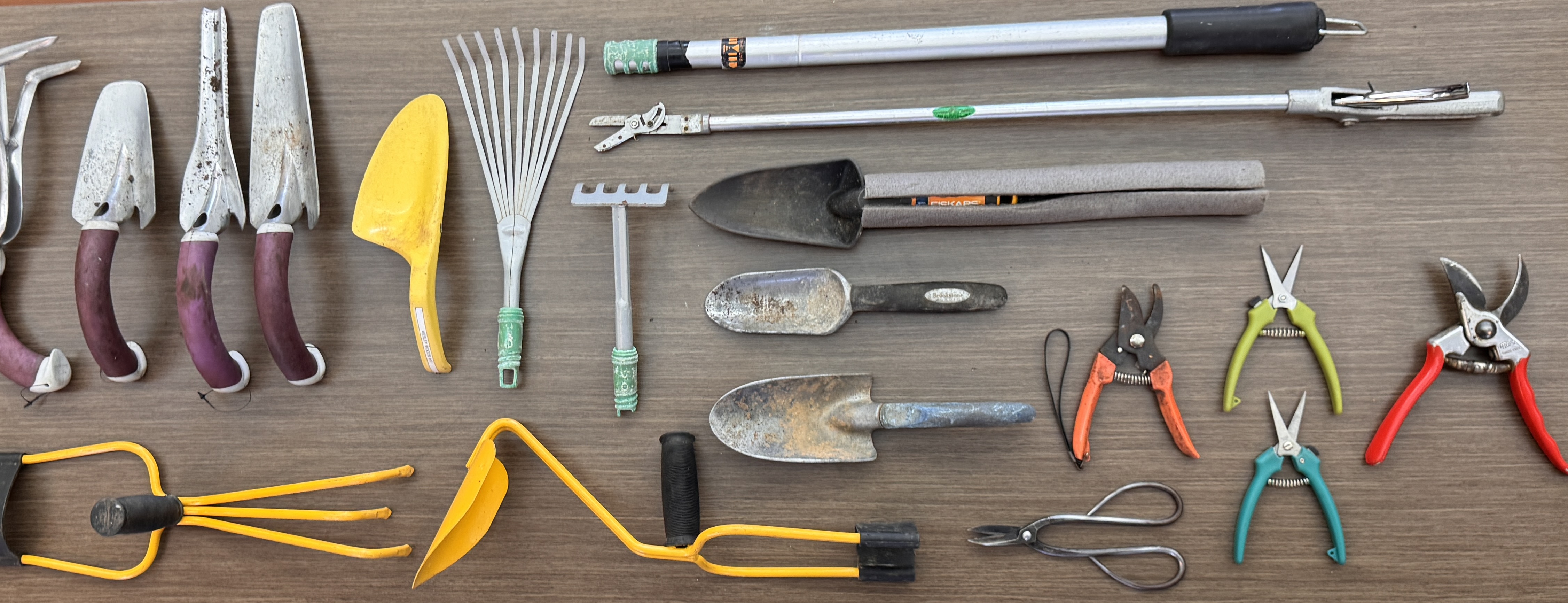
Tool research included existing pruning tools, adaptive grips, and assistive technology examples. The goal was to understand how a familiar gardening tool could be made more comfortable and accessible without making users feel separated from the activity.
Design Criteria
The tool needed to support comfort, dignity, and real use.
The pruning tool needed to reduce grip strain while preserving the familiar action of pruning. It also needed to feel approachable, easy to understand, and appropriate for use in a shared horticultural therapy setting.
This pushed the project toward a larger handle surface, a more supportive grip, a high-contrast visual layout, and a ratcheting mechanism that could help reduce the force required during cutting.
Form Development
Exploring handles, grip positions, and cutting mechanisms.
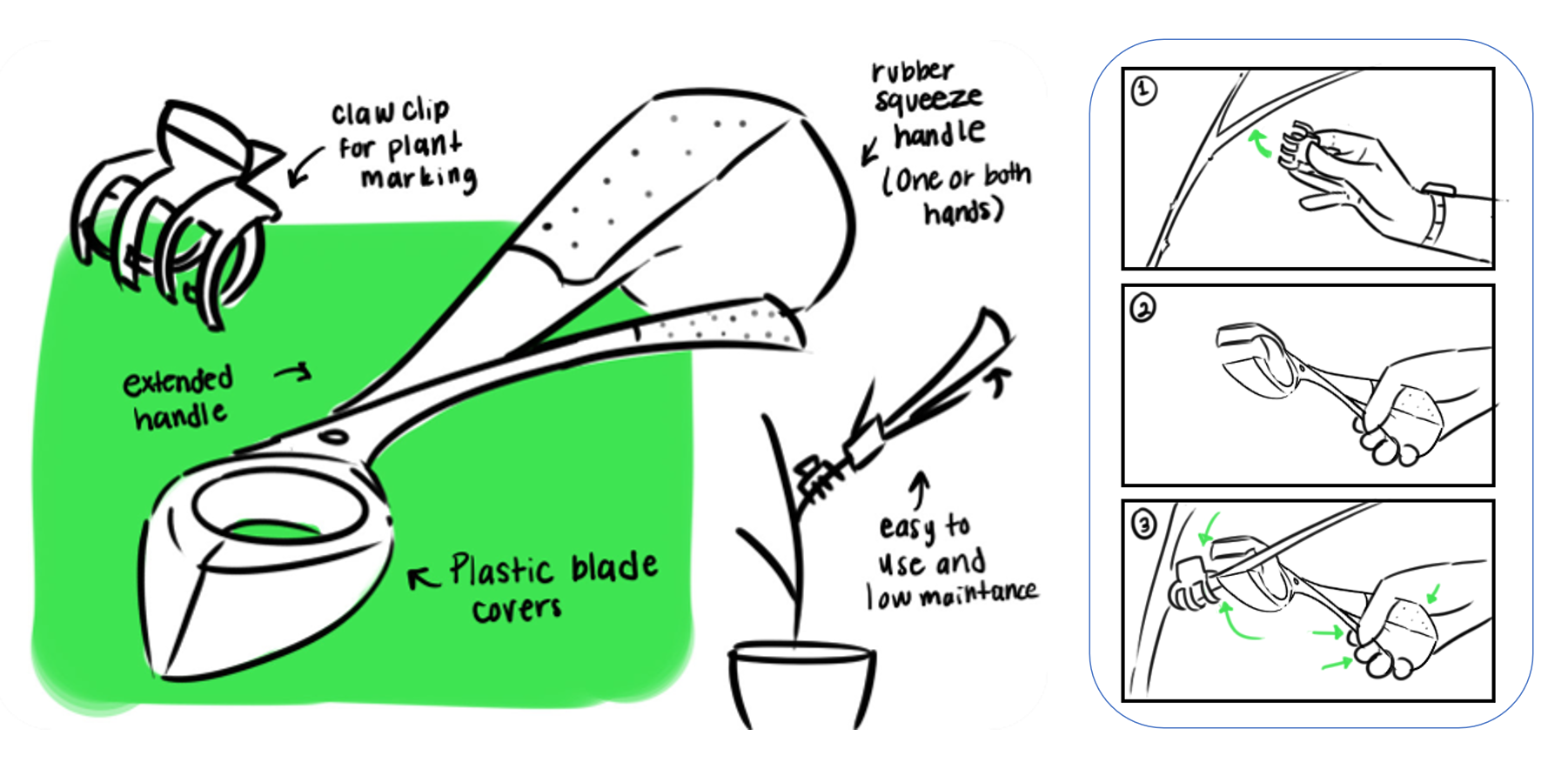
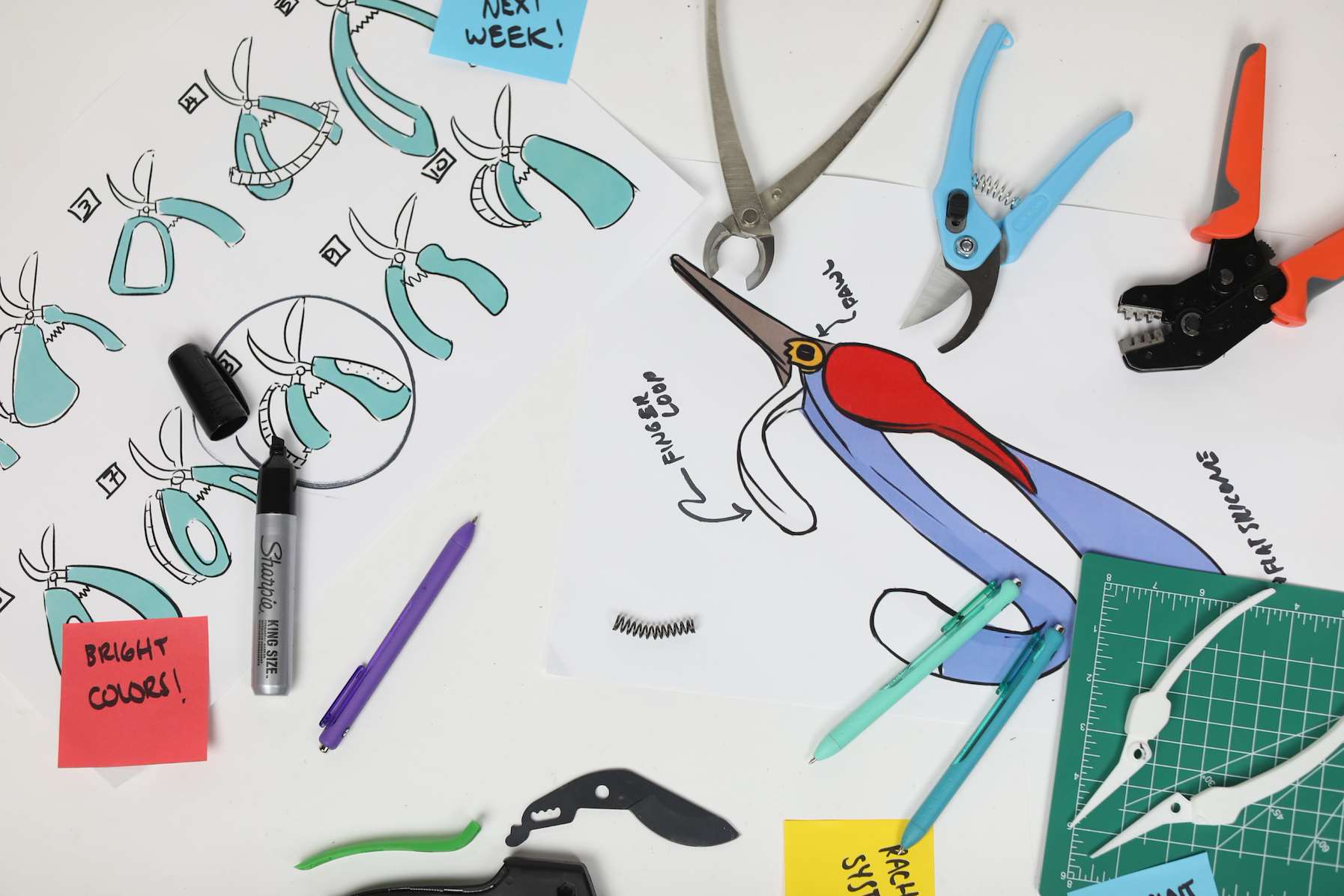
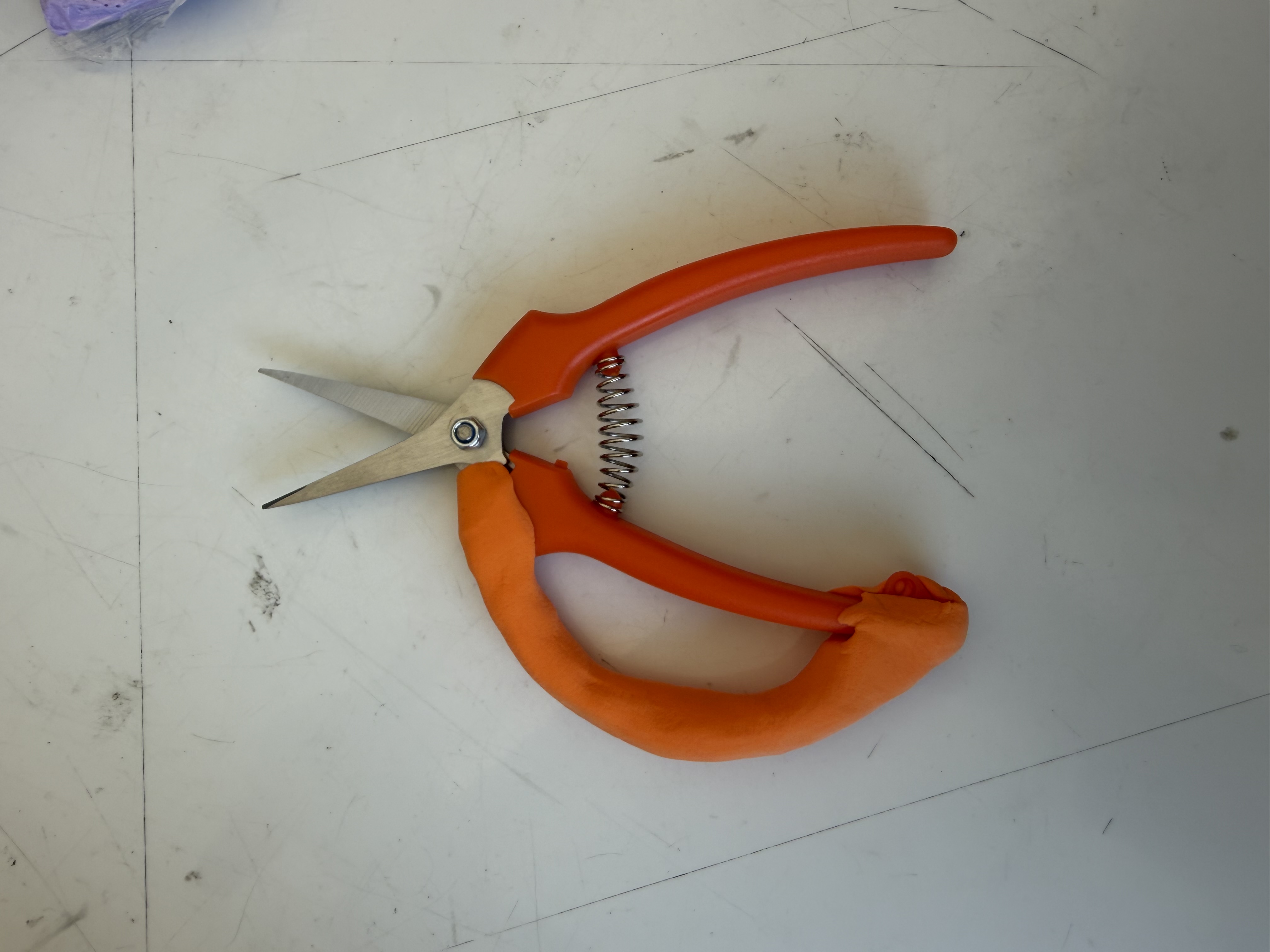
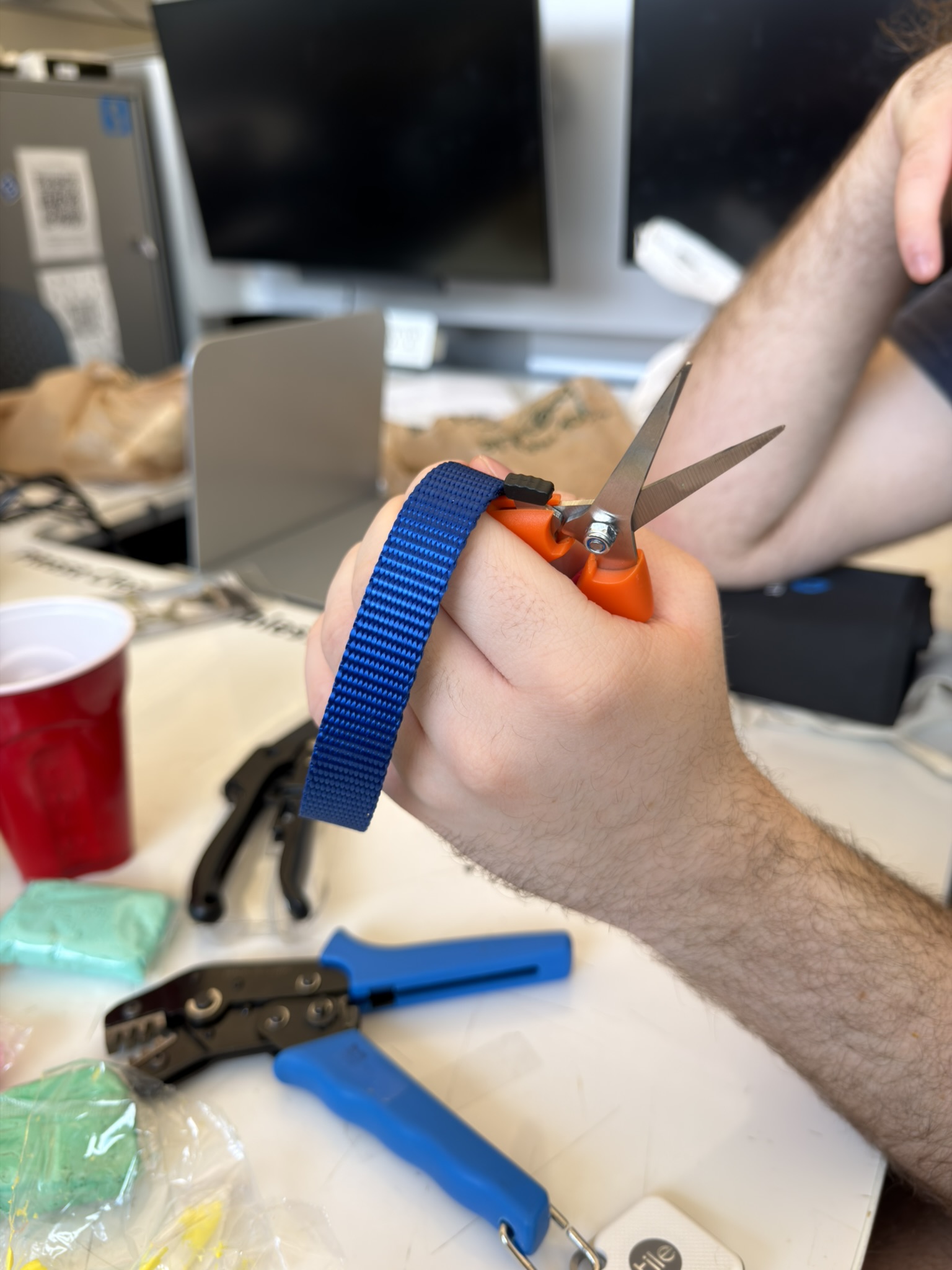
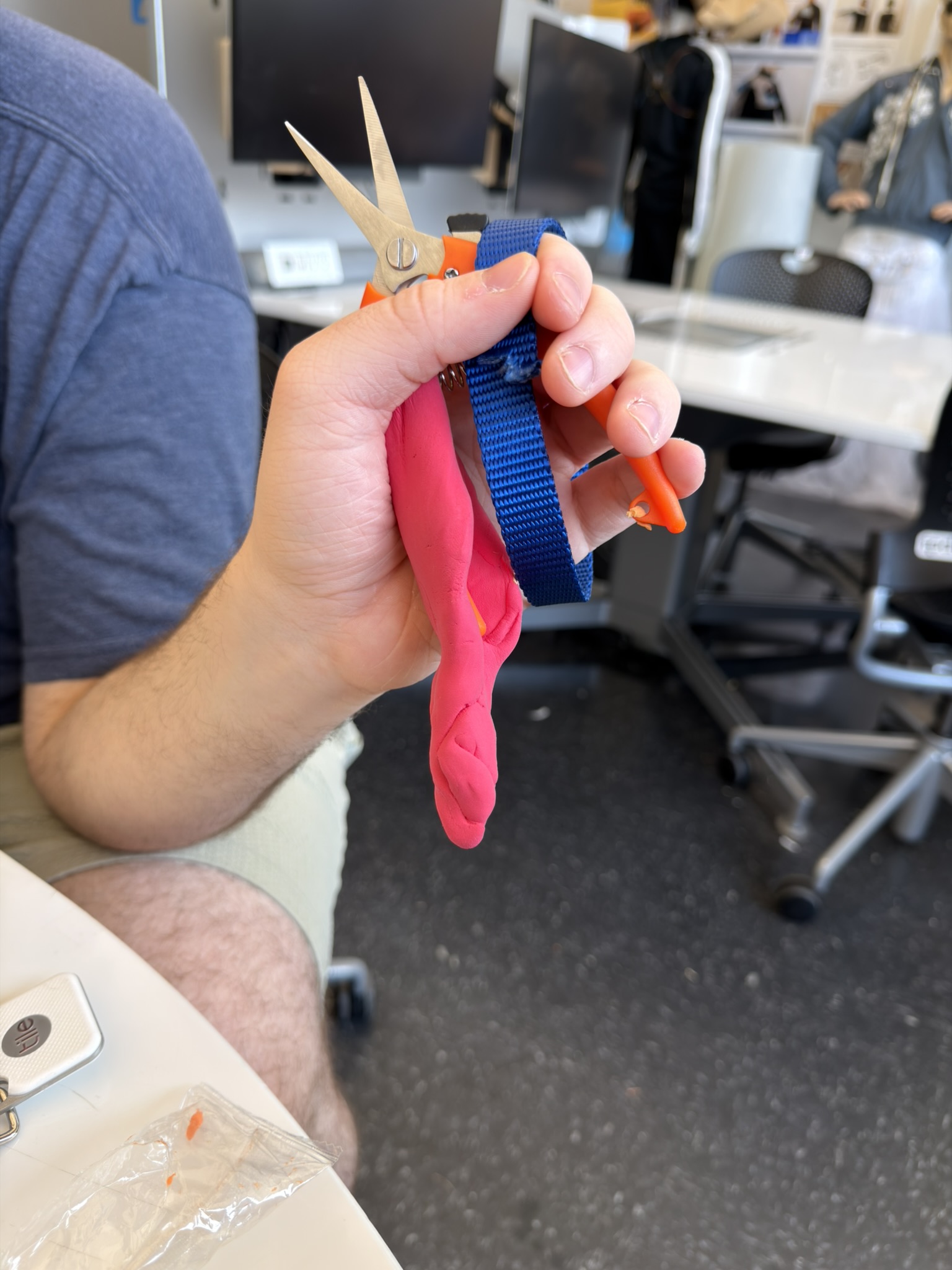
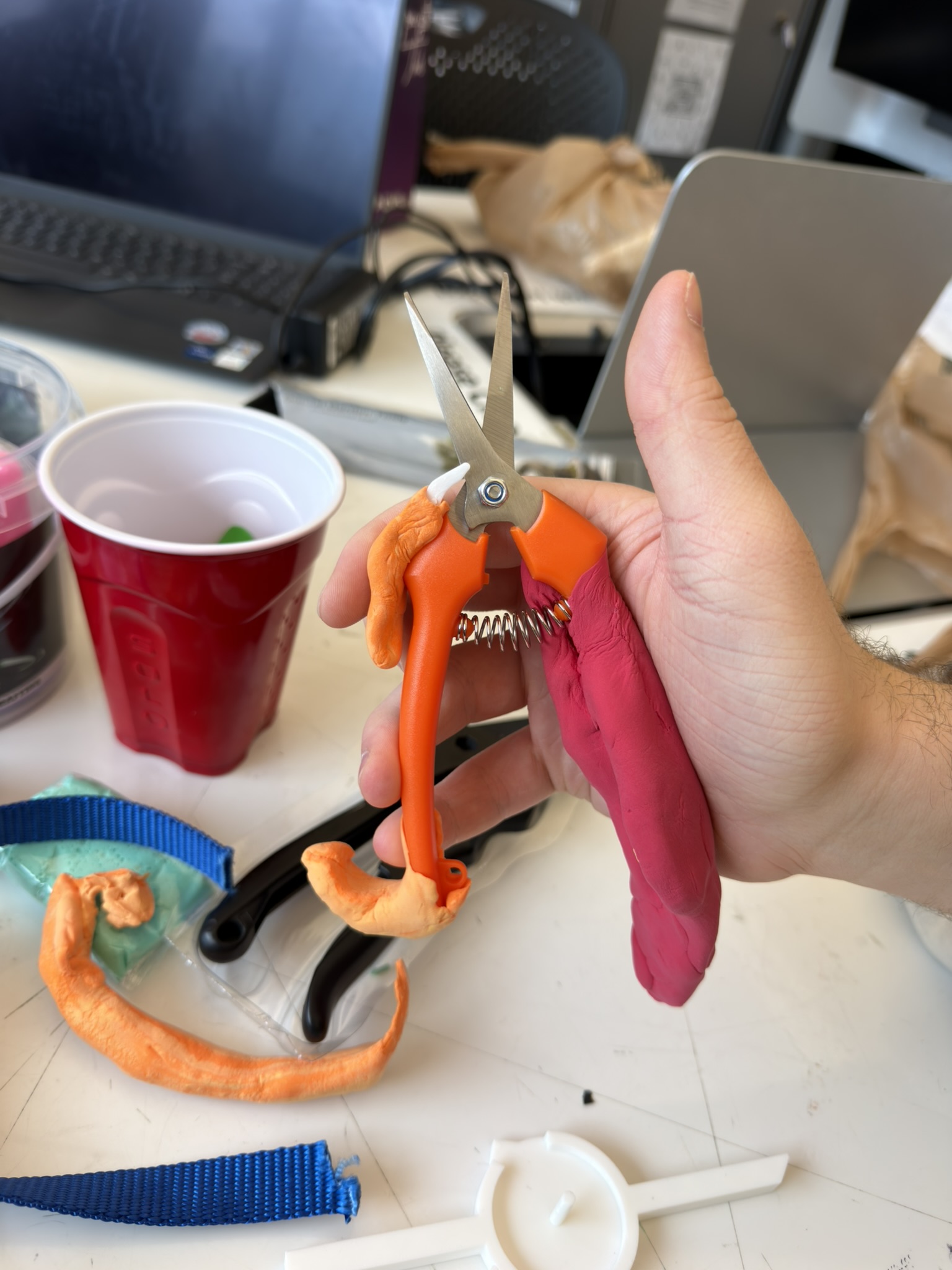
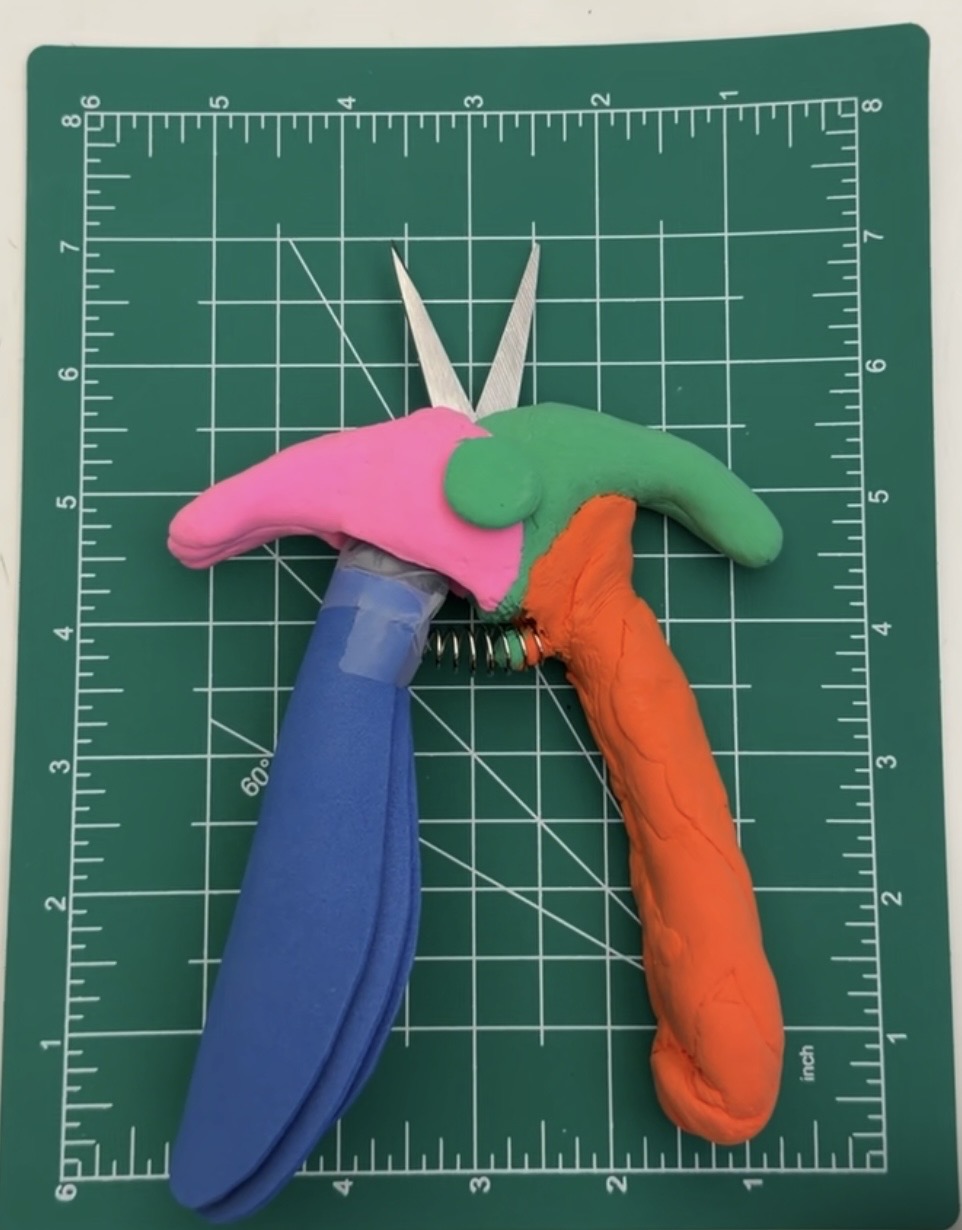
Sketching and form exploration focused on how the tool could sit in the hand, how much leverage the user could access, and how the handle shape could guide a comfortable grip.
The early models explored both the ergonomic handle language and the mechanical relationship between the grip, blade, and ratcheting assist.
Mechanism Exploration
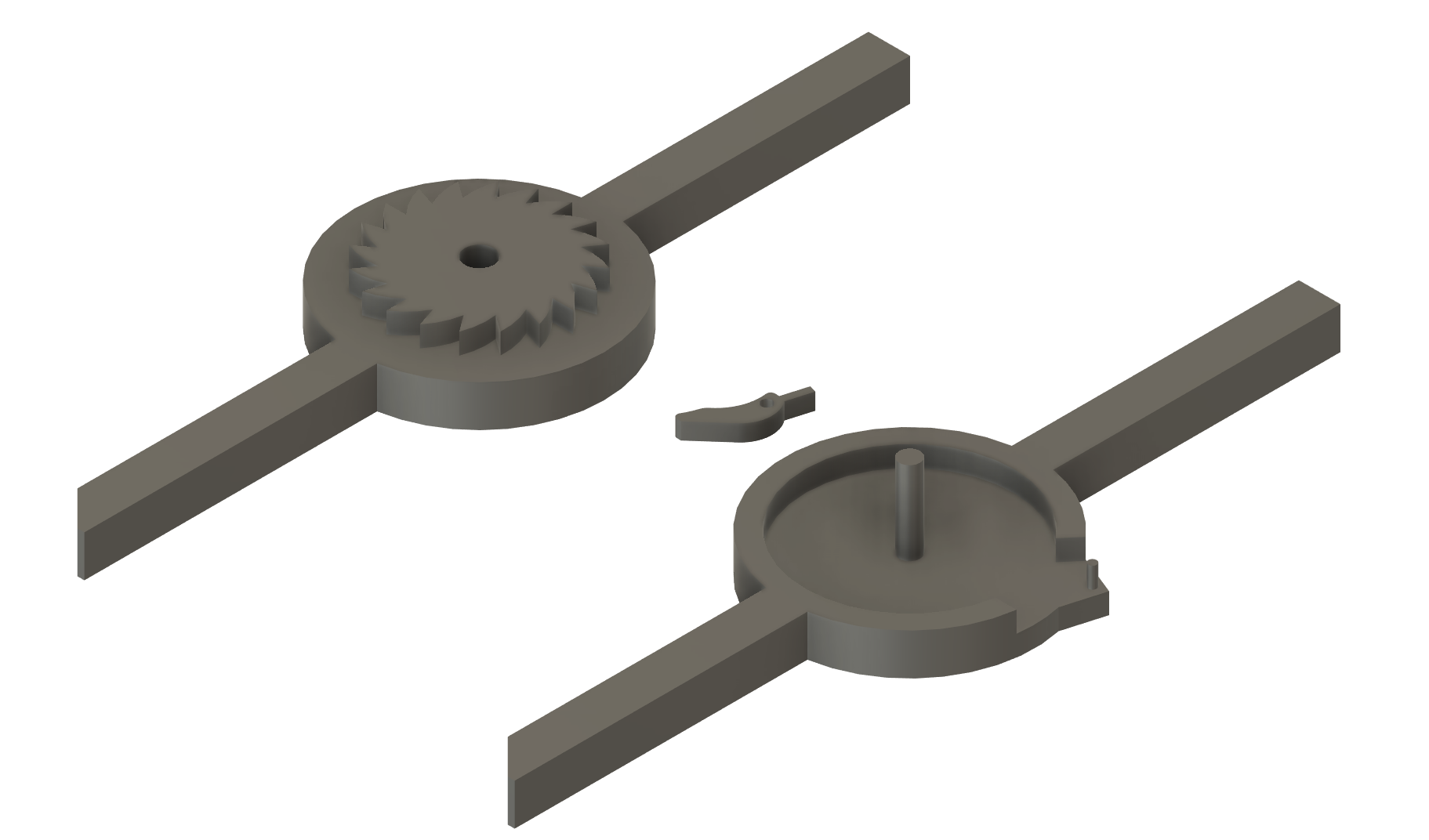
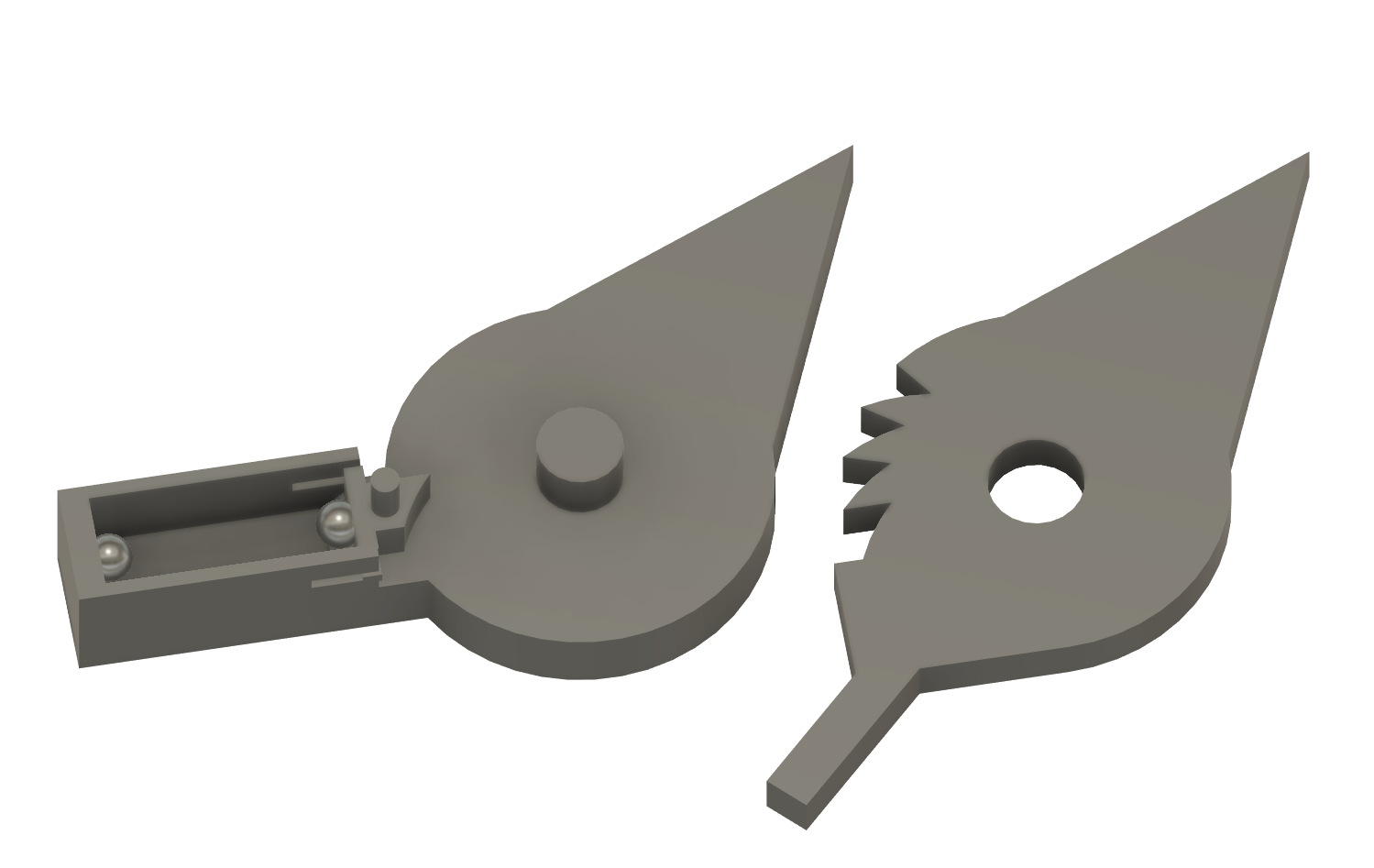
Oversized CAD models helped explain the ratcheting mechanism.
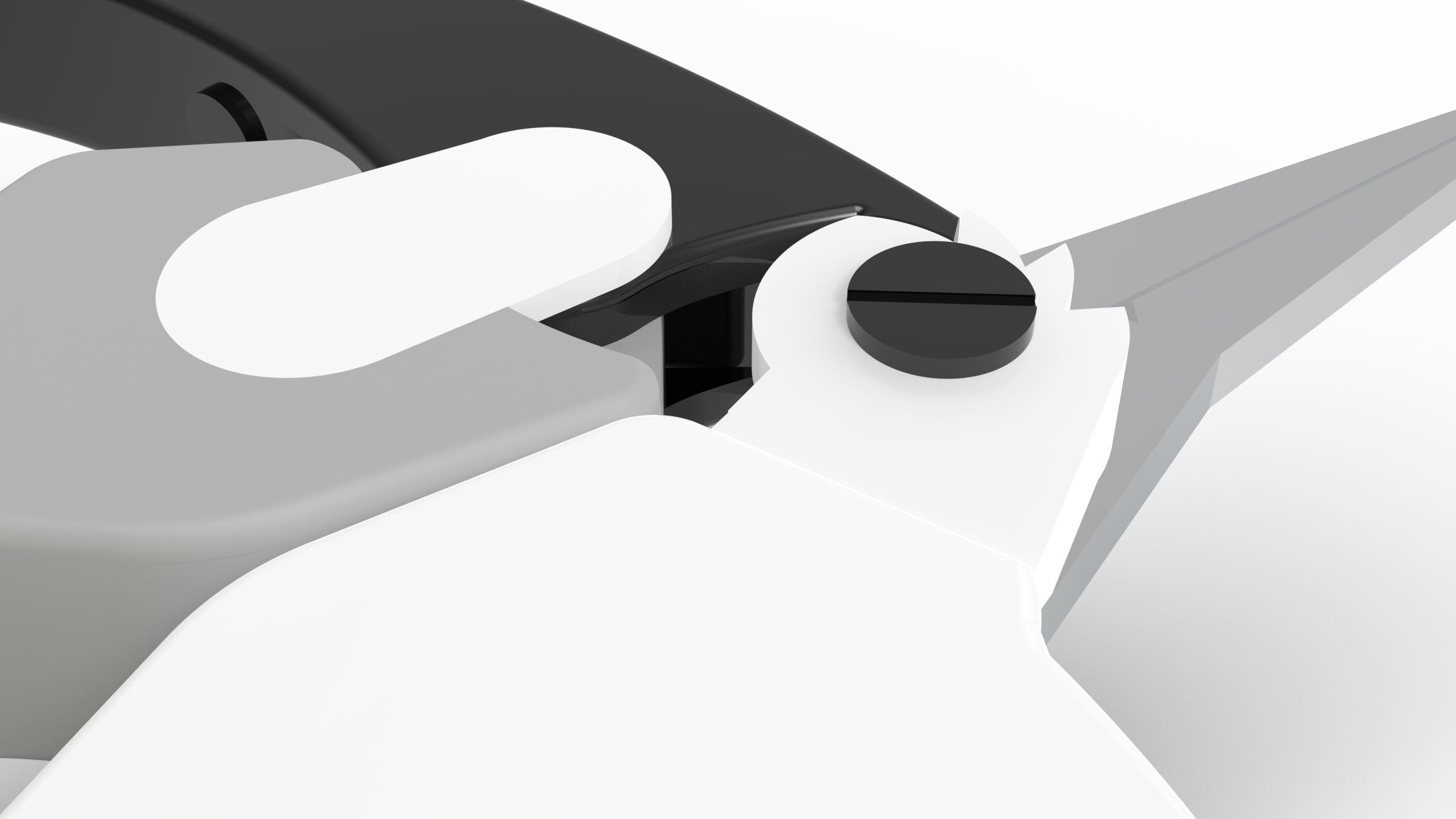
Several CAD models were used to study and explain the ratcheting mechanism before it was scaled into the final tool form. These models intentionally exaggerated the mechanism so the motion and interaction could be demonstrated more clearly to clients.
Once the mechanism was understood, it was reduced in scale and integrated into the overall pruning tool so the final object could remain closer to the size and feel of a familiar handheld garden tool.
Final Render
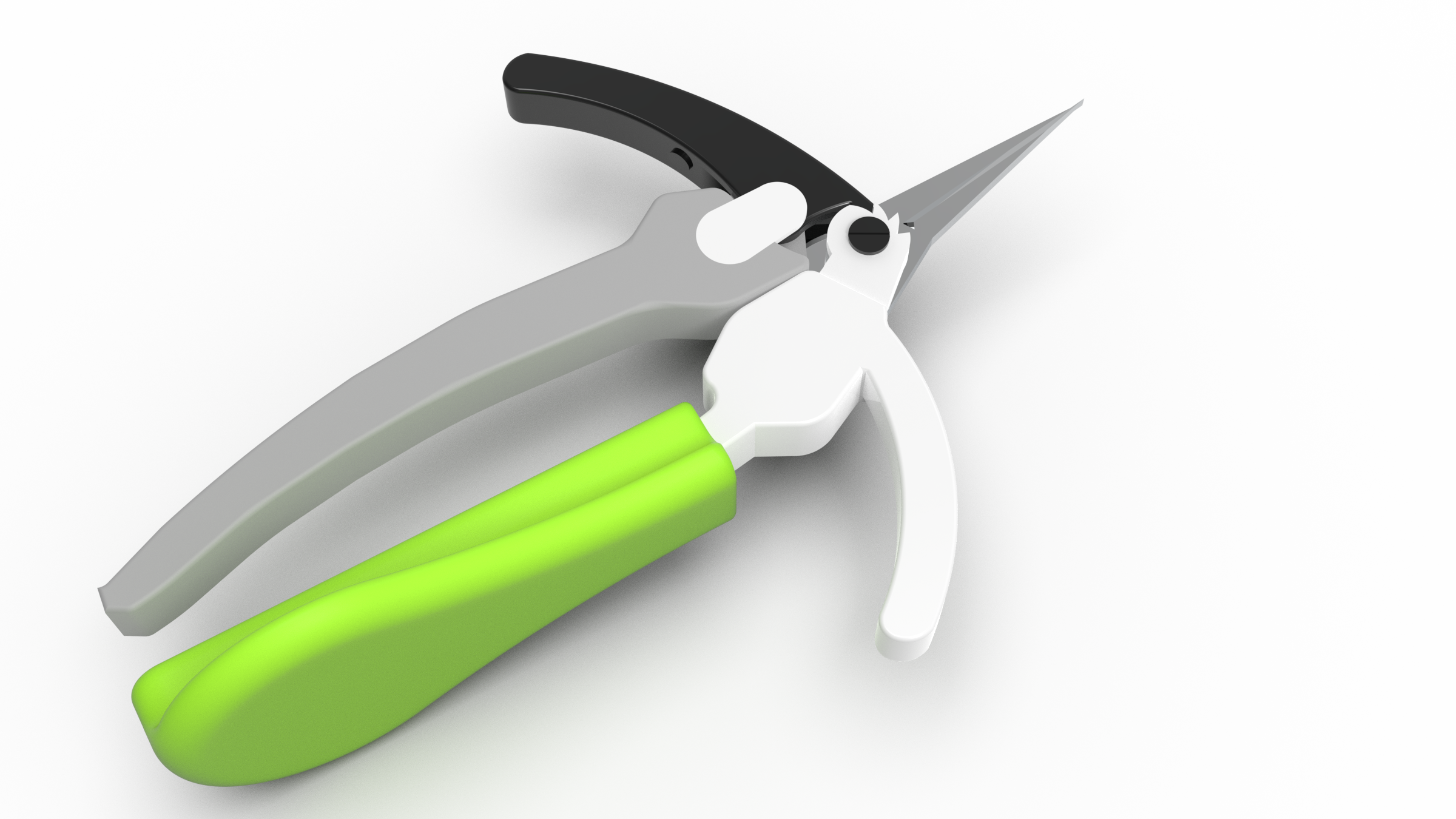
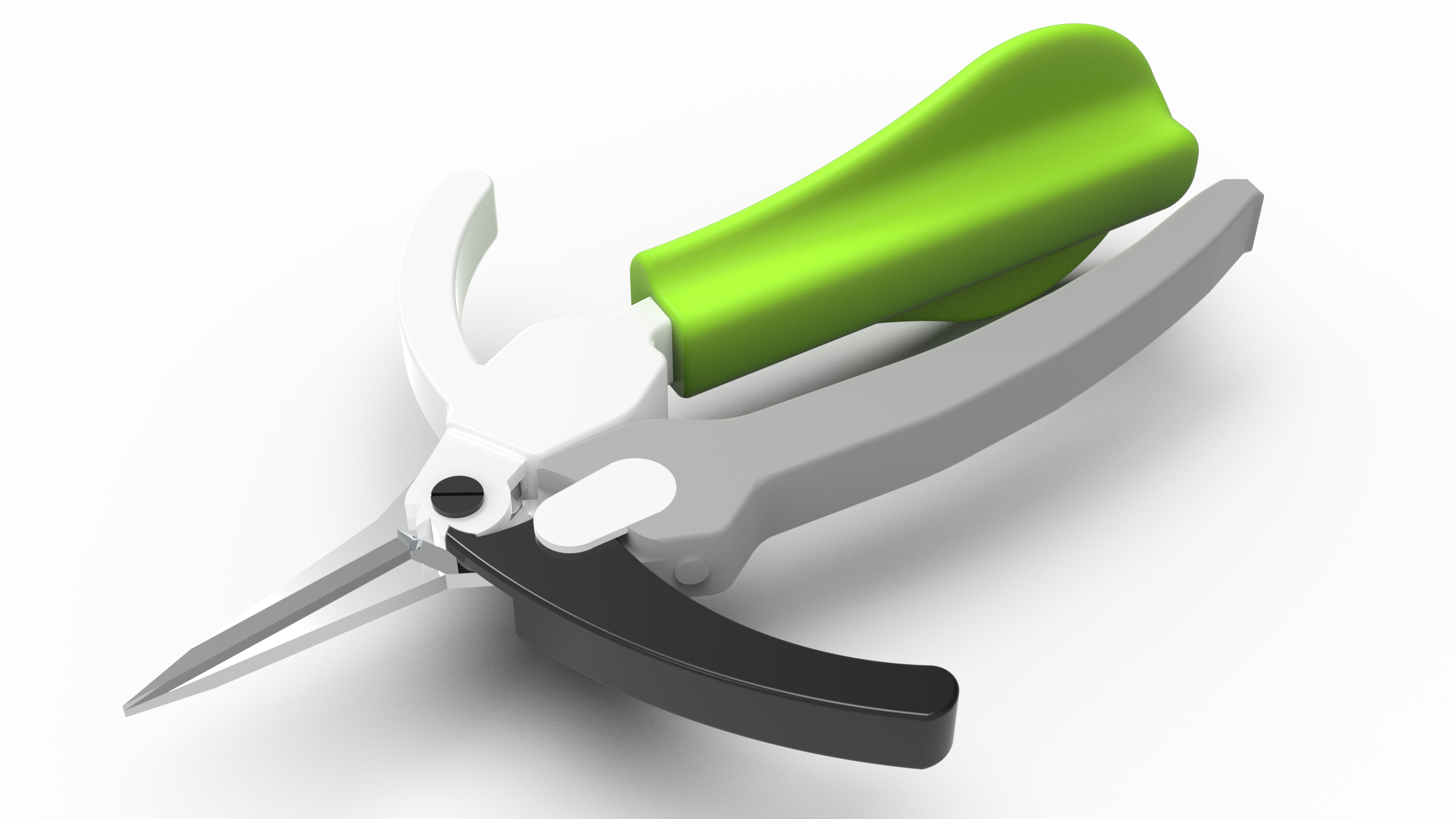
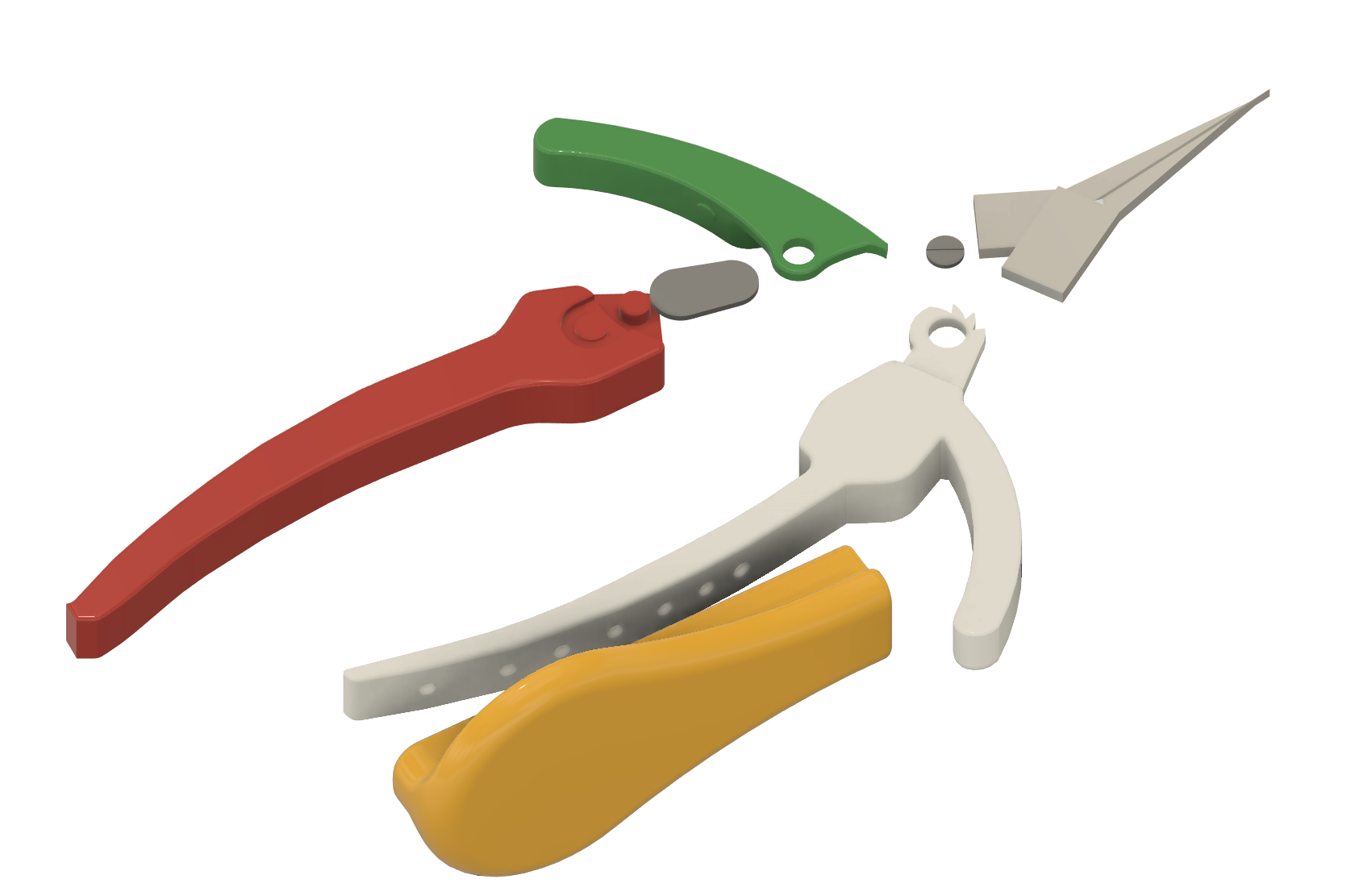
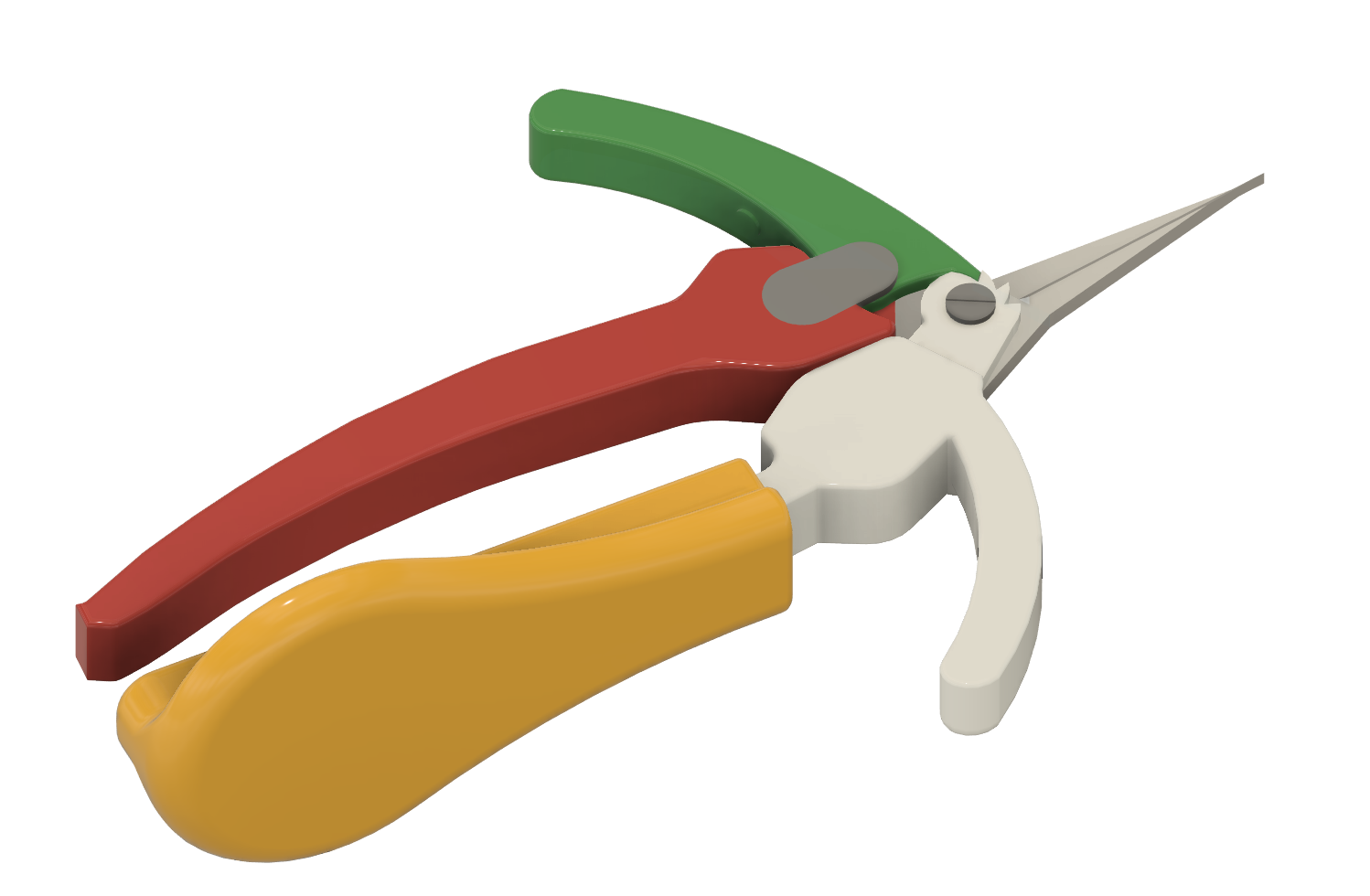
The final direction combines a familiar pruning form with a ratcheting assist mechanism.
The updated render shows the pruning tool with a clearer visual language, including a larger supportive handle, a familiar pruning posture, and a visible ratcheting mechanism intended to reduce the force required during cutting.
The project is continuing beyond my involvement, with underclassmen developing the concept further in hopes of refining it toward manufacturability.
Outcome
A tool concept designed to make participation easier and more comfortable.
The final concept supports horticultural therapy through a more accessible pruning interaction. It combines a larger supportive handle, a familiar cutting posture, high-contrast visual cues, and a ratcheting mechanism that can assist users who experience reduced grip strength or fatigue.
The project demonstrates design research, co-design in a sensitive care context, ergonomic form development, CAD modeling, physical prototyping, and mechanism-based product design.